New oil: why it is green, why it stings and how long its season lasts
Every autumn the same scene comes back. A bottle that has just arrived, a color that looks almost fake, a drizzle of oil on warm bread and then that scratch in the throat that makes you cough. Some people smile, some think something is wrong.
Nothing is wrong. It is oil in its most alive form, the one that does not last long and that for many people is the only time of the year they truly taste a new oil. Understanding why it is like this, and how long you have to enjoy it, changes the way you buy it and use it.
Oil does not improve with age. It is born at its peak, and from that day on everyone’s job, the mill’s and the kitchen’s, is to lose as little of it as possible.
What new oil is, and when it arrives
New oil, which many people also call olio novello, means the extra virgin olive oil of the crop year that has just begun, meaning the harvest and production season that runs from autumn to winter. The first bottles arrive between October and November, depending on the cultivar, the area and when the producer decides to harvest.
That «when» is not a detail. An old Italian saying goes «the longer the olive hangs, the more it yields», but that is only half true: past full ripeness the olive no longer produces oil, it only loses water. Whoever waits too long gets an oil with higher acidity, more peroxides, fewer polyphenols and fewer aromas. A Spanish proverb puts it better: whoever wants all the oil does not get all the olives.
The three stages of the olive
- Veraison. The olive starts losing its green and turns wine-colored. It yields little oil, but that oil is deep green and very fruity.
- Intermediate stage. Red-black color, softer flesh, the amount of oil rises quickly.
- Full ripeness. Maximum oil content, lighter color, sweeter flavor. From here on the olive gives nothing more.
The most expressive new oil comes from the first two stages. It costs more, because the same olives yield less oil, and it is the trade-off made by producers who focus on quality.
Why is new oil so green?
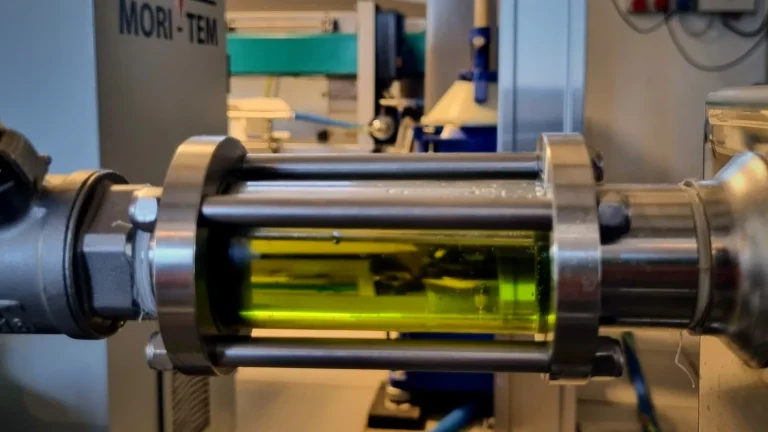
The green comes from chlorophyll, the pigment of olives picked early. The closer the olive is to veraison, the greener the oil. As the olive ripens the chlorophyll drops, and the oil turns golden yellow.
So the color tells you something about when the olives were harvested, but it is no guarantee of quality. In fact, in the light chlorophyll becomes a problem: it triggers a form of oxidation, photo-oxidation, that spoils the oil faster. It is one of the reasons a good oil is never kept in a clear bottle on display in a window.
And if it is cloudy?
Freshly made oil can look slightly cloudy. On its own this says nothing about quality: it depends on how the oil was processed and whether it was filtered. If you are unsure, the simplest thing is to ask the people who made it. A serious producer can answer you.
Why is new oil bitter, and why does it sting your throat?
Bitterness and pungency are two different sensations, and it is worth not confusing them.
- Bitterness is a taste. You feel it on your tongue, and it depends mainly on two substances from the polyphenol family, oleuropein aglycone and ligstroside aglycone, which activate specific bitter receptors.
- Pungency is not a taste. It is a sensation like wasabi or black pepper, and it is caused by oleocanthal, another polyphenol. Its receptor is concentrated in the throat and almost absent on the tip of the tongue: that is why the pungency of oil comes later, at the back, and sometimes makes you cough.
In new oil these substances are at their peak. Over the months they get used up, because they are the very ones defending the oil from oxidation: they sacrifice themselves in place of the fats. That is why the same oil, tasted in October and then in June, seems softer. It has not matured, it has spent part of its defenses.
For years we were taught that a «light» oil, one you cannot taste, was a refined oil. It is the opposite. A well-made extra virgin, freshly milled, makes itself felt. Intensity changes from cultivar to cultivar, and not everyone has to love the boldest oils, but a total absence of bitterness and pungency in a new oil is more suspicious than their presence.
How long does new oil last?
New oil does not expire when winter ends. It changes. Aromas, fruitiness and liveliness are at their peak in the months after milling, then they decline slowly. How slowly is decided almost entirely by storage.
The enemies are always the same: light, heat, air. The oil’s natural antioxidants slow oxidation down but do not stop it, and they get used up over time. That is why oil has to be protected from the start, not «rescued» once it has already begun to change.
How to store it at home
- In the dark. A dark bottle or a tin, inside a closed cupboard, never on the windowsill.
- Somewhere cool. Away from the oven, radiators and any source of heat. A cool pantry is perfect.
- Closed. Cap always screwed on: every time the oil breathes, it loses something.
- In the right size. A bottle that stays open for months works against you. Better a size you finish in a few weeks, and open another one when it runs out.
How to use new oil without wasting it
New oil is at its best raw, where aromas and pungency arrive intact. It is the season of simple dishes, which almost seem to exist just for it:
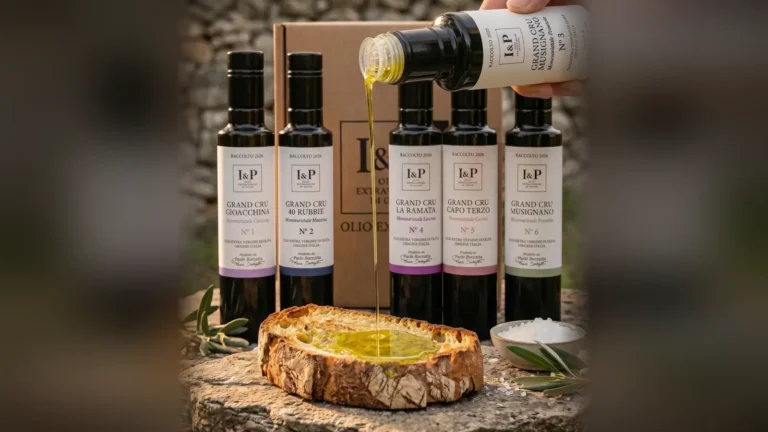
- Toasted bread, just rubbed with garlic, with a pinch of salt. The most honest test of an oil.
- Bean dishes and soups for autumn, with the oil poured into the bowl at the end, not into the pot.
- Seasonal vegetables raw or lightly blanched, from artichokes to turnip greens.
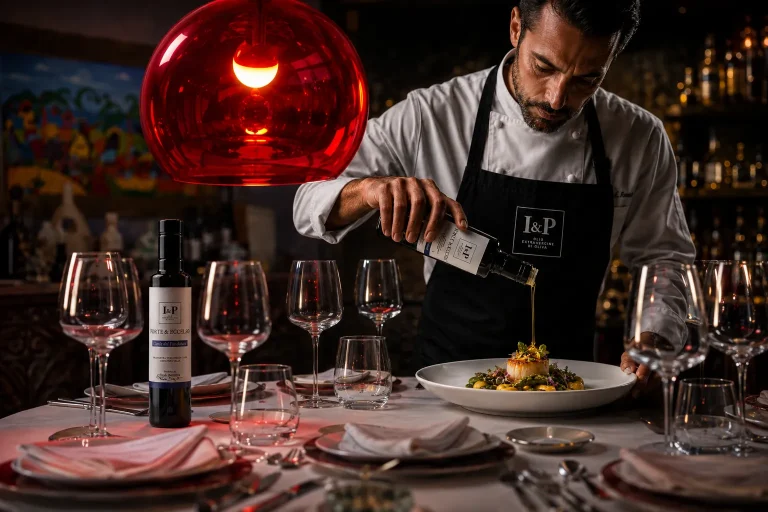
- Grilled meat and fish, with a drizzle of oil once cooked.
The most intense oils stand up to bold flavors, the more delicate ones go with fish, fresh cheeses and raw vegetables. If you want to find out which intensity suits you, try our Which oil is right for you quiz.
I&P new oil
In Canino, in ancient Etruria, the 2026 harvest began on October 4 and ended on October 19. Sixteen days that decide how much aroma will reach the bottle.
The olives are picked in the morning, with pneumatic harvesting combs over nets, and reach the mill within 4 hours in refrigerated vans. Malaxation stays below 27 °C, with short times, and on the Grand Cru labels you will find the cultivar, the harvest year and the wording «cold extracted». Analyses and panel tests for each harvest are entrusted to Dr. Alfredo Marasciulo, MIPAAF Panel Leader, and to the Chemiservice laboratory in Bari, and are available on request.
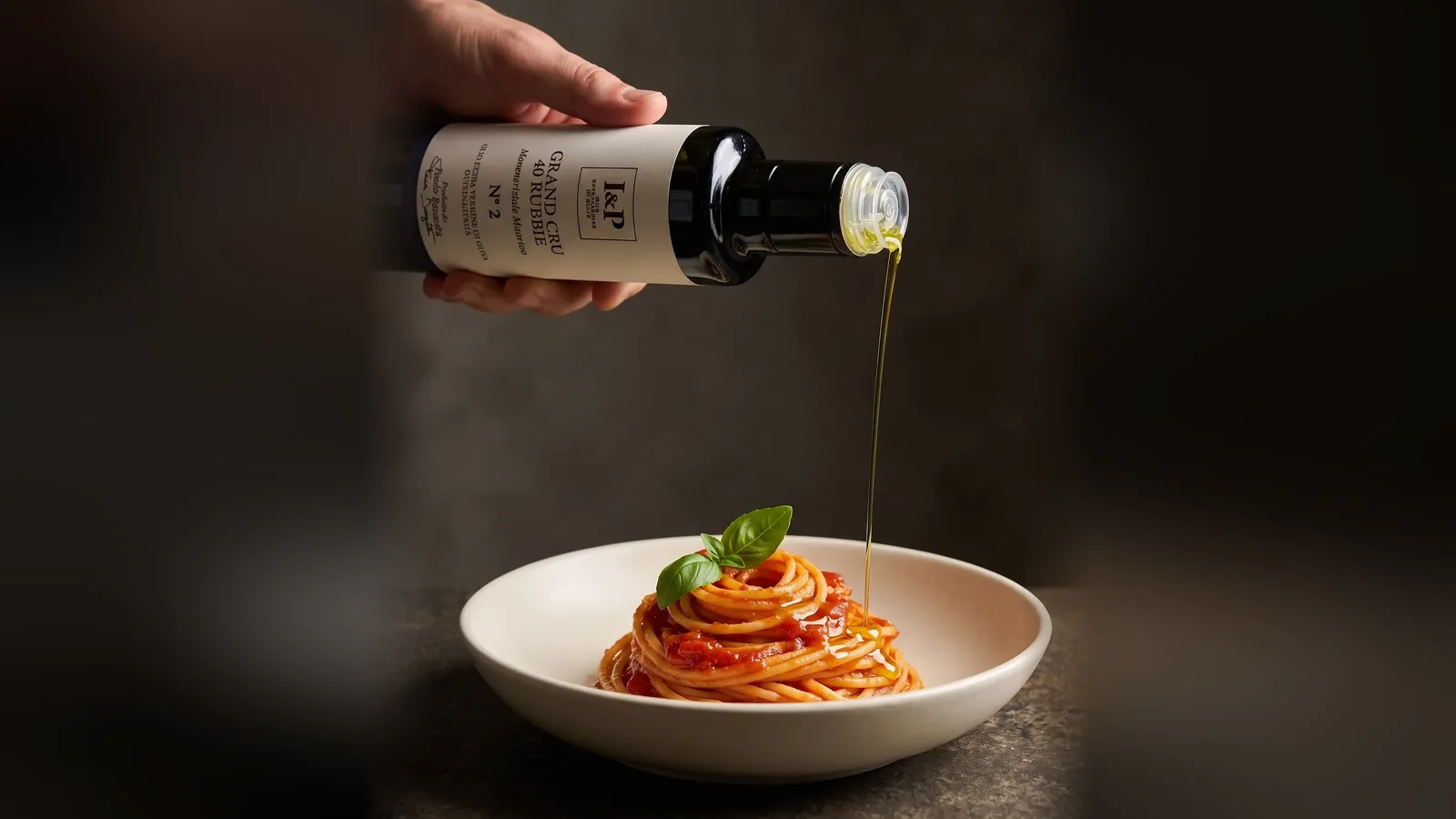
N°2 Grand Cru 40 Rubbie Maurino, the first oil of 2026
The first oil we made this year is N°2 Grand Cru 40 Rubbie Maurino, a Maurino single-cultivar with an intense character. Maurino is a little-known cultivar, and on its own it gives an oil that makes itself felt: it is the most direct way to understand what new oil means.
Primavera in Autunno, the first special cuvée
Primavera in Autunno is our first special limited-edition cuvée, signed by the Founder: 2026 harvest, just made, with intense fruitiness. On the nose and palate it brings fresh vegetal notes, green tomato, wild mint and cinnamon, the scents of spring at the start of autumn. There are 100 bottles of 250 ml, numbered, with a handwritten, signed label.
The small size is no accident. An oil like this should be enjoyed young, and 250 ml is finished while the aroma is still full.
The other Grand Crus
Alongside the Maurino there are the other Grand Cru, all already available: single-cultivar oils that each tell the story of a different cultivar, Caninese, Leccino, Frantoio, Pendolino, Rosciola. On each oil’s page you will find its intensity, delicate, medium or intense, and on the label the harvest year.
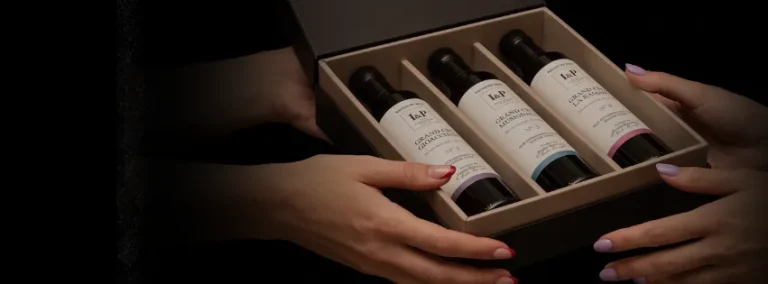
If you don’t know where to start, the Small Pack brings together six bottles, the Grand Cru oils from N°1 to N°6: three Caninese from three different crus, the Maurino, the Leccino and the Frantoio. It is the most direct way to taste the season cultivar by cultivar.
In brief
| What to look for | GOOD SIGN | Alarm bell |
|---|---|---|
| Harvest year | Clearly stated, the one that has just begun | Missing, or a harvest that is already old |
| Color | You look at it, but you don’t judge by it | Used as the only proof of quality |
| Bitter and pungent | Present, clean, balanced | Completely absent in a freshly made oil |
| Bottle | Dark, or a tin, in a size that suits your use | Clear and exposed to light |
| Storage at home | Dark, cool, cap closed | Near sources of heat, open for months |
| Use | Raw, on simple dishes | Kept aside for «special occasions» |
Frequently asked questions about new oil
When does new oil come out?
Between October and November, when the harvest season begins. Dates change from area to area and from cultivar to cultivar, and depend on when the producer decides to harvest.
Is new oil that stings your throat good?
Yes. The pungency comes from oleocanthal, a polyphenol, and you feel it in your throat because that is where its receptor is. In a freshly milled oil it is a sign of freshness, not a defect.
Why is new oil green?
Because of the chlorophyll in olives picked early. The color tells you something about when they were harvested, but it is no guarantee of quality.
How long does new oil last?
It is at its peak of aroma and liveliness in the months after milling, then it declines slowly. In the dark, somewhere cool and with the cap closed it keeps longer; a small size helps you finish it while it is at its best.
How can I tell if an oil is really new?
Look at the harvest year on the label, not the best-before date. For 100% Italian oil sold in Italy it is mandatory.
Are olio nuovo and olio novello the same thing?
Yes, they are two names for the same oil: extra virgin olive oil from the harvest that has just begun, in the weeks after milling.
Why does quality new oil cost more?
Because olives picked early, when they give the greenest and most aromatic oil, yield less oil. Add to that milling within a few hours of picking and cold extraction: choices that cost money, and that you can taste in the glass.
New oil is not a calendar ritual. It is the only moment when an extra virgin shows everything it has, before time starts to wear it down. Choosing it well, storing it with care and using it without fear, raw, every day, is the simplest way to lose nothing of its season.
Taste the 2026 season
N°2 Grand Cru 40 Rubbie Maurino is the first oil of the 2026 harvest. Alongside it, Primavera in Autunno, our first special limited-edition cuvée, in just 100 numbered bottles.