Extra virgin olive oil at the restaurant: how to tell if someone takes care of it
In a good restaurant almost everything has been chosen. The wine list, the bread, the catch of the day, the butter, the light on the table. And the oil? It is often the only thing nobody has really chosen: any old bottle, from any old supplier, sitting on the table without a name.
And yet it is the note that finishes the dish. Taste and smell are the only two senses connected directly to the part of the brain that holds our memories: that is why a great oil is not just tasted, it is remembered. A restaurant that knows this treats it accordingly.
You will not find a blacklist here. You will find five signs, simple and visible without asking anyone’s permission, that tell you whether a restaurant treats oil as an ingredient or as an accessory.
An oil with a name can be told about. An oil without a name can only be poured.
The bottle that arrives at the table
You see the first sign before you even order. When oil is made available to customers, Italian law requires it to be in a labeled container, with a closure that cannot be opened without breaking it and a system that prevents refilling once it is empty. It is the anti-refill cap (Law 9/2013, art. 7). The idea is simple: whoever puts oil on the table must be able to prove it is the oil named on the label.
- Good sign. A bottle with a label and an anti-refill cap: the restaurant has chosen an oil it can name.
- Alarm bell. An anonymous cruet, glass or ceramic, filled from a container you cannot see: there could be anything inside.
A label you can read
A labeled bottle is a bottle you can read. Ask for it, or take a close look when it arrives. Look for this information:
- The category. Extra virgin, virgin: it is written, not guessed.
- The origin. It is mandatory for extra virgin and virgin oil.
- The best-before date. Every oil has a date by which it is best consumed.
- Storage. The wording «store away from light and heat».
- The business responsible and the batch. Who puts it on the market and in which lot, in other words traceability.
Be careful not to ask more of the label than it gives. It tells you whether an oil is traceable, not whether it is good. Quality comes after that, and depends on how the oil was made and how it is treated.
Where the bottle sits
An oil cannot be fixed afterwards: it has to be protected from the start. Oxidation, the process that leads to rancidity, is triggered by heat, oxygen and light. The oil’s natural antioxidants, such as polyphenols and vitamin E, slow it down but do not stop it, and they get used up over time. When the process is advanced, the result is unpleasant smells anyone can recognize.
That is why the place where the bottle lives matters. Look around: a closed bottle, out of direct light and away from the stove, shows care. A bottle left in a sunny window or next to sources of heat shows the opposite, even if there is an excellent oil inside.
Who tells its story
The fourth sign is a question: «What oil is this?» The worst answer is «extra virgin, Italian». The best is a name: a cultivar, a producer, a harvest year. The person serving you does not need to be an expert. Someone in that restaurant needs to have chosen the oil and be able to tell you why.
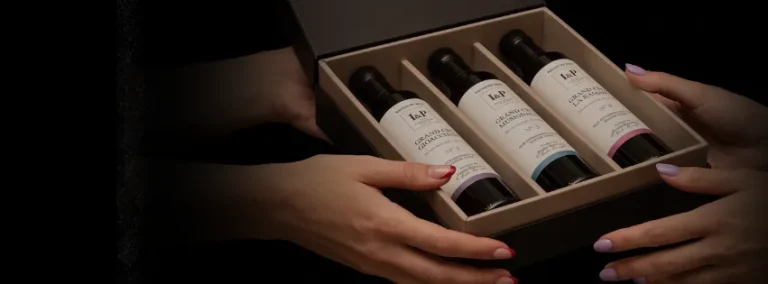
That is why at I&P the cru principle applies: one cultivar plus one olive grove. Each oil comes from a single variety and a precise micro-area, and that is why it has a story to tell.
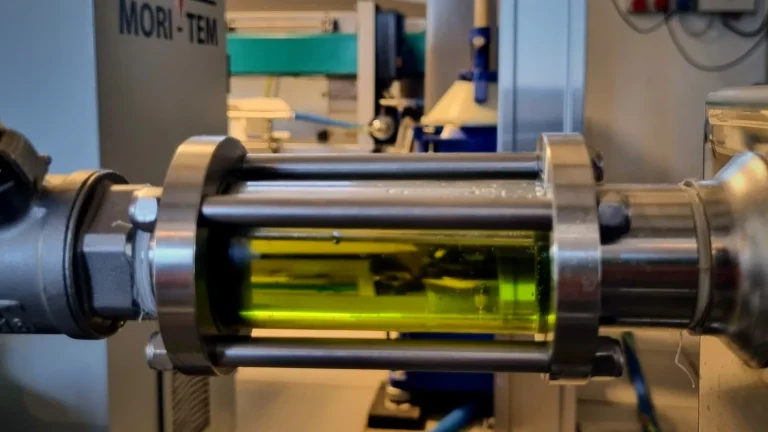
I&P Grand Cru oils show on the label the cultivar, the harvest year and the wording «cold extracted». The olives reach the mill within 4 hours of picking, and for every harvest acidity, peroxides, polyphenols and panel test results are documented and available on request.
The oil on the plate
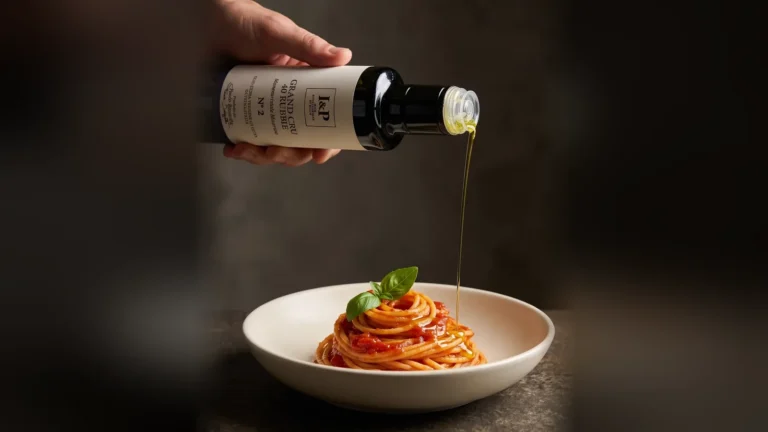
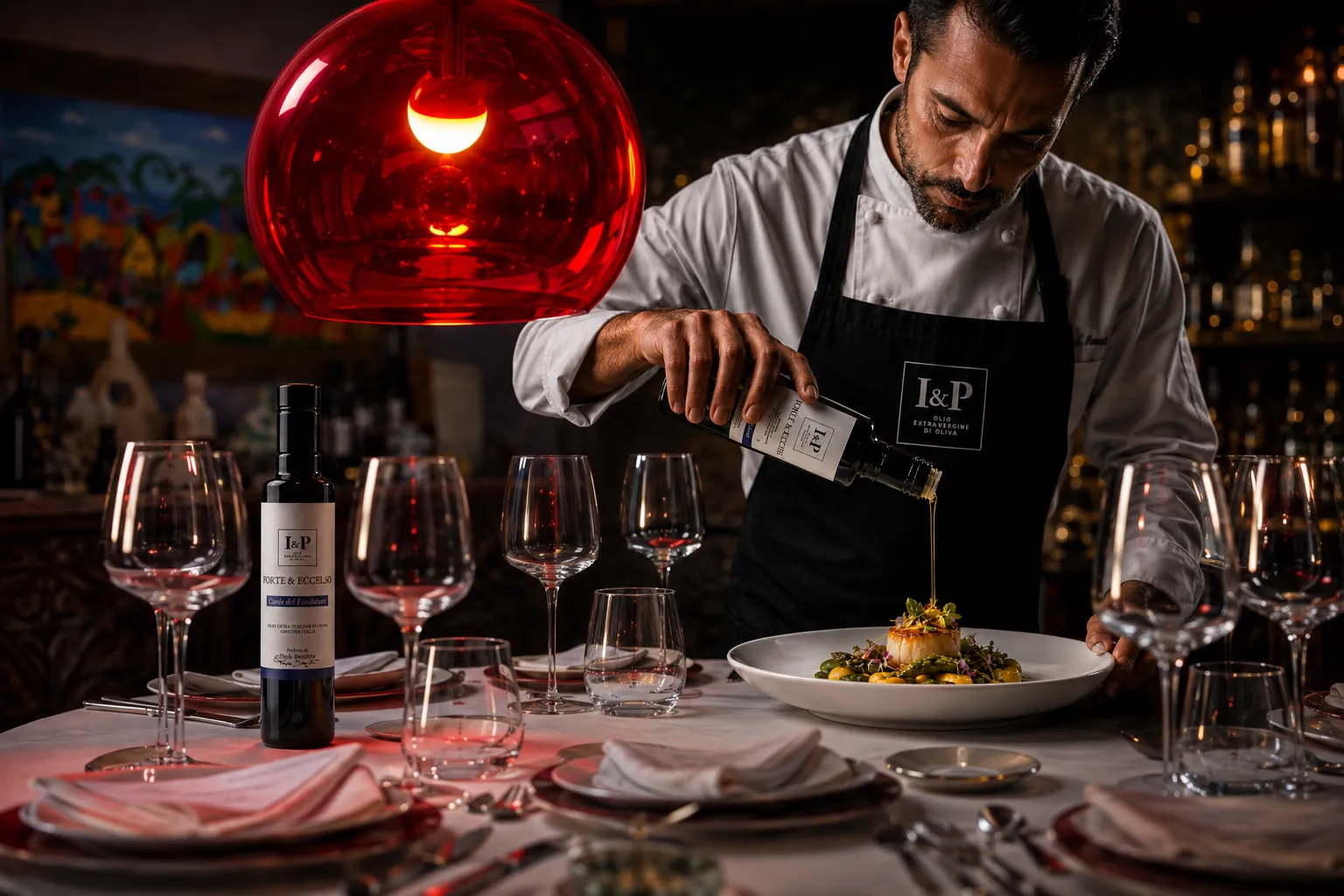
The last sign is the hardest to fake. A restaurant that has chosen its oil uses it as an ingredient: it knows where to use it raw, and where its character accompanies the dish instead of covering it. A drizzle poured at the end of service out of habit is a gesture. An oil chosen for that dish is a decision.
For chefs, I&P has designed the Alchimie dei Sapori line, with pairings for vegetables, fish and meat, alongside the single-variety Grand Cru oils in 250 ml anti-refill bottles.
In brief
| What to look for | GOOD SIGN | Alarm bell |
|---|---|---|
| The bottle | Labeled, with an anti-refill cap | Anonymous cruet filled elsewhere |
| The label | Category, origin, best-before date and batch you can read | No information |
| Storage | Closed, away from light and heat | In the window or next to the stove |
| The story | Cultivar, producer, harvest year | «It’s extra virgin», full stop |
| The dish | Oil chosen for the dish | A drizzle out of habit |
When a restaurant goes all the way
Some restaurants already show these five signs. Some choose to go a step further: to bond with a producer not through a supply contract, but through a shared philosophy. At I&P this has a name: the Ambassadors’ Club.
The Club brings together restaurants, wine bars and fine dining venues, in Italy and abroad, that choose to champion the culture of quality olive oil. The plaque goes to places in tune with the company’s mission, turning flavors into the pleasure of living, and with its values: simplicity, humanity, transparency and total honesty, mastery of technique, modernity and innovation, improving the ecosystem.
On 23 September 2026 the plaque went to Ristòria Pepe Nero, in Capodimonte, on Lake Bolsena. The words of its owner, Daniele Ciuchini, sum up everything you have read so far better than we could:
Knowing the product, using it with awareness and being able to tell its story through the cooking and the experience at the restaurant.
Knowing is the bottle and the label. Using it with awareness is storage and the dish. Telling its story is the answer to your question at the table. They are the same five signs, seen from the other side of the table.
One last piece of honesty: on our Houses of Pleasure blog, restaurant reviews are anonymous and independent of the brand of oil they use. The Club is something else, and it does not buy any opinion.
Pouring is not enough. You have to understand, choose, feel. At the restaurant it works just as it does at home: next time an oil arrives at your table, look at it before you taste it.
Where to find I&P oils at the table
Discover the Ambassadors’ Club venues, or take your Grand Cru home from the boutique.