
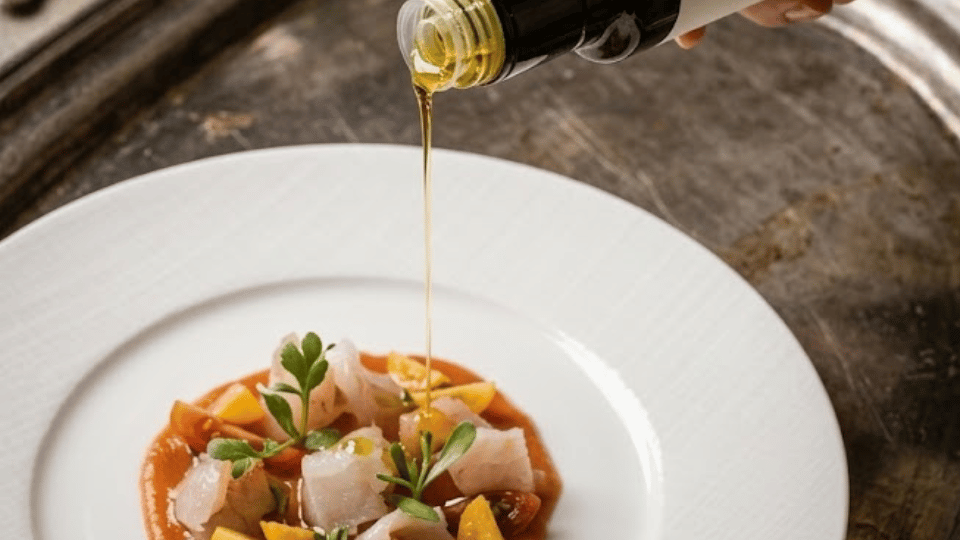
From raw drizzle to frying: how to use extra virgin olive oil at every cooking stage
Italy produces over 500 olive cultivars. No other country in the world has this level of biodiversity. Each variety yields an oil with a distinct character: sweeter or more pungent, more floral or more herbaceous, with a long persistence or a soft finish.
Yet in most Italian kitchens, there is only one bottle of olive oil. It is used for everything: on bread, in the soffritto, for frying, on salad. As if a single wine could accompany every dish on the menu.
The good news is that you don't need to be an expert to use extra virgin olive oil more consciously. All it takes is two or three simple principles and the willingness to pay attention to what happens on the plate. This guide starts with raw use, moves on to cooking, dispels a myth about frying, and goes all the way to desserts. With a few specific suggestions on the I&P products that are best suited to each context.
FIRST USE
Raw use: where the character of the oil is most pronounced
There is no heat to temper the aromas, no cooking to transform them. What you perceive on the nose and in the mouth is exactly what the oil is: the territory, the cultivar, the moment of harvest.
Raw oil on a piece of toasted Tuscan bread, on a steaming chickpea soup, on a beef carpaccio, or on a slice of burrata is a precise culinary choice, not a decorative one. The oil enters the balance of the dish as a main ingredient, not as a background condiment.
For raw use, an oil with a bold character is preferable: medium-intense fruitiness, a distinct bitterness, and a perceptible pungency. A Grand Cru monocultivar Caninese, with its notes of artichoke and chicory, holds up perfectly against strong flavors. An oil that is too delicate, when used raw on a structured dish, simply disappears.
The N°3 Grand Cru Musignano Caninese and the N°5 Grand Cru Capo Terzo are natural candidates for raw use on bold dishes. On legume soups, bruschette, raw vegetables, and meat or fish carpaccios, their polyphenolic intensity translates into a clean and lingering flavor signature.
SECOND USE
Soups, legumes, and cooked vegetables: oil as a structural element
The great soups of traditional Italian cuisine, from Tuscan ribollita to Venetian pasta e fagioli, from Umbrian cicerchia to Tuscia farro soup, all have one thing in common: a drizzle of high-quality oil poured into the dish right before serving. It is not just a custom; it is a technique.
Raw oil on hot soups performs several functions at once. It brings aroma, adds structure to the palate, balances the acidity of tomatoes or the starchiness of legumes, and creates that sense of "roundness" that transforms a simple soup into a complete dish.
For these applications, an oil with medium-intense fruitiness but a certain harmony—without excessive sharpness in its bitterness—works best. The Forte & Eccelso, the Founder’s blend that balances cultivars of different characters, is designed exactly for this: versatility without sacrificing depth.
The Forte & Eccelso goes with soups, legumes, grilled vegetables and pasta with tomato sauce with a balanced presence: intense enough to stand out, harmonious enough not to dominate. An oil to always keep within reach in the kitchen.
THIRD USE
Fish: when lightness is a virtue
Fish is the most delicate pairing because seafood flavors are often subtle, and the wrong oil will mask them instead of enhancing them. An intense Grand Cru monocultivar on a sea bass carpaccio or raw red prawns clashes with the product. The goal is to accompany, not overpower.
For raw fish or fish cooked using delicate methods—such as steaming, al cartoccio (en papillote), or salt-crusted—oils with a light fruitiness, floral or fine herb notes, and a mild pungency are required. The bitterness should be barely perceptible, with a clean finish.
For more intense preparations—such as grilled fish, baccalà mantecato (creamed cod), or robust fish soups—you can confidently step up the intensity. The rich sauce of a cacciucco can easily handle an oil with strong character.
The Alchimie per il Pesce are built on this principle: a blend selected to accompany seafood without overshadowing it. From marinated anchovies to salt-crusted sea bass, from tuna tartare to sole in butter, it is the I&P oil designed specifically for this use.
FORTH USE
GRILLED MEAT: intensity versus intensity
The logic of meat pairings is the exact opposite of fish: it is all about matching intensities rather than contrast. A Florentine steak, herb-crusted lamb, or a sliced beef *tagliata* with arugula feature powerful, rich flavors that can handle a bold oil without losing balance.
On these dishes, the bitterness and pungency of a Grand Cru Caninese become true allies: they cut through the richness of the meat, cleanse the palate between bites, and add a herbaceous note that seamlessly integrates with the herbs in the marinade or the side dish.
The same applies to white meats prepared with slow-cooking methods, braises, and roasts: here, the oil also becomes part of the cooking juices, where its aromatic structure transforms but does not disappear.
The Alchimie per la Carne are the I&P blend crafted to stand up to the most structured animal proteins. An oil that is not intimidated by a ribeye steak, wild boar stew, or game *alla cacciatora*.
FIFTH USE
Frying: The Great Misconception
The smoke point of extra virgin olive oil ranges between 180°C and 210°C depending on its quality: the higher the quality, the higher the smoke point, as low acidity and a high polyphenol content make the oil more heat-stable. A high-quality extra virgin olive oil, such as the I&P Grand Crus with an acidity below 0.3%, can withstand frying temperatures perfectly suited for any home use.
Home frying typically takes place between 160°C and 180°C. Under these conditions, a quality extra virgin olive oil never reaches its smoke point. What makes it excellent for frying is not just its thermal stability, but its ability to form a thin crust around the food, reducing fat absorption. Contrary to common intuition, frying with a high-quality extra virgin olive oil is often more digestible than frying with seed oil.
Tradition already knew this. Frying with olive oil has been an integral part of Campanian, Sicilian, Tuscan, and Lazio cuisine for centuries. It was not a mistake: it was the best choice available, and it remains so.
Using a high-quality extra virgin olive oil for frying is not a waste. It is the choice of those who know that the final taste of the fried food depends on the oil as well, not just the breading.
For frying, the Alchimie per le Verdure selection is the most versatile choice: an oil crafted to complement the world of vegetables in all cooking methods, including frying zucchini blossoms, artichokes, seasonal vegetables, and supplì.
SIXTH USE
Breakfast and Desserts: The Surprising Use
Tuscan and Lazio tradition calls for bread and olive oil for breakfast. It is not nostalgia: it is a sensorially flawless pairing. A durum wheat bread, perhaps lightly toasted, with a drizzle of fruity olive oil and a pinch of salt is one of the most direct ways to understand what a high-quality extra virgin olive oil really means. No intermediaries, no cooking, and no other interfering flavors.
Less well-known but equally exceptional is the role of extra virgin olive oil in pastry making. Traditional desserts from Central and Southern Italy use oil as a substitute for butter: ring cakes, dunking biscuits, almond cakes, and sweet focaccie. The result is a lightness of texture and an aromatic complexity that butter simply cannot provide. An oil with notes of fresh almond and ripe fruitiness integrates beautifully into these batters and doughs.
Dark chocolate also shares a surprising affinity with intense and pungent fruity oils: the polyphenols in both overlap, creating a bold, lingering structure that chocolate connoisseurs recognize immediately.
For breakfast and desserts, the Forte & Eccelso offers the right balance: enough character not to disappear in a dough or on bread, enough harmony not to overpower more delicate flavors such as almond, honey or ricotta.
Recap: an oil for every use
| Kitchen Use | Suggested Intensity | I&P Product |
|---|---|---|
| Raw (as a finishing oil) on dishes with character | Intense | Grand Cru Musignano / Capo Terzo |
| Soups, Legumes, and Cooked Vegetables | Medium-Intense | Forte & Eccelso |
| Raw or Gently Cooked Fish | Light | Alchimie per il Pesce |
| Meats, Grilled Dishes, and Game | Intense | Alchimie per la Carne |
| Vegetable Frying and Traditional Fried Dishes | Medium | Alchimie per le Verdure |
| Breakfast, Sweets, and Pastry Making | Medium Armonic | Forte & Eccelso |
There is no single perfect oil for everything: there is the right oil for every moment. The biodiversity of Italian cultivars offers exactly this opportunity: to choose, to vary, and to discover that a dish you have known forever completely changes with the wrong oil—or with the right one.
Don't know where to start? The quiz does the work for you
Four questions about your taste and your cooking habits. In less than two minutes, we will recommend the I&P oil best suited to how you eat—not how someone else does.
