Monocultivar: what they are and why they make the difference
Imagine opening a bottle of Barolo. You already know what to expect: Nebbiolo, the Langhe region of Piedmont, pronounced tannins, and an aromatic profile you would recognize even with your eyes closed. That precision, that consistency year after year, is possible because by regulation, Barolo is a single-varietal wine. One variety, one territory, one identity.
In extra virgin olive oil, exactly the same thing happens, with one difference: consumer awareness is much further behind. Most people buy oil without knowing which olives it comes from, which region, or which cultivar. They buy "extra virgin" as a category, not as an identity.
Monocultivars exist to change this habit. And when you succeed, olive oil stops being a condiment and becomes a choice.
What does monocultivar mean, exactly
A monocultivar oil, also known as a single-varietal oil, is an extra virgin olive oil produced by pressing olives of a single variety. No blends, no assembly of different cultivars: what is in the bottle is the pure fruit of a tree with a precise genetic heritage, grown in a precise territory, harvested at a precise moment of the season.
The term "cultivar" is a contraction of cultivated variety: a plant variety selected and maintained through human cultivation over time. In the case of the olive tree, each cultivar has distinct botanical characteristics: fruit size and shape, pit-to-pulp ratio, ripening time, disease resistance, and fat and polyphenol content. These genetic elements translate directly into the sensory profile of the oil.
There are over 500 recorded olive cultivars in Italy, more than in any other country in the world. This is not a statistical curiosity: it is the reason why Italian olive biodiversity is a cultural and gastronomic heritage without equal. Each region, often each province, has its own native varieties that have grown on that soil for centuries and have developed a bond with the territory that is impossible to replicate elsewhere.
Monocultivar and blend: two philosophies, not a hierarchy
A blend is not the opposite of quality compared to a monocultivar. It is a different production philosophy, with different objectives.
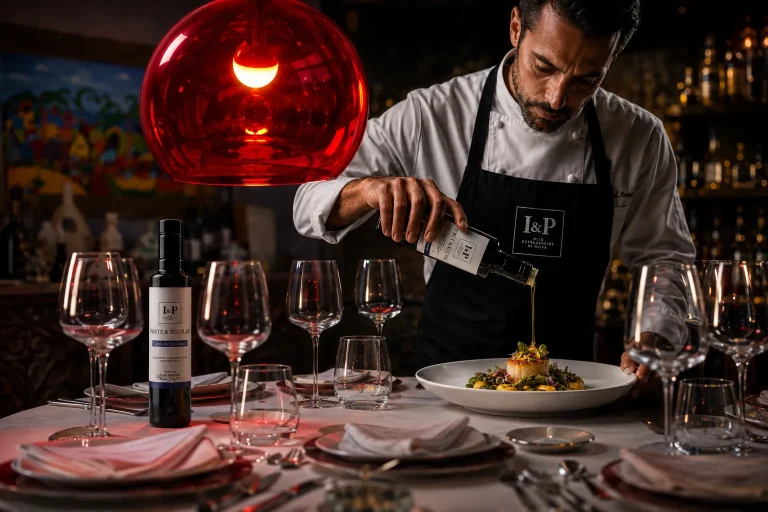
A blend is created by assembling oils from different cultivars, often from different territories, with the goal of obtaining a balanced product that can be reproduced year after year and is suited to a wide palate. A well-made blend is a work of craftsmanship and sensitivity: the master olive oil maker knows the characteristics of each component and uses them to build an overall harmony. The *Alchimie dei Sapori* by I&P are blends in this sense: oils designed for a specific use in the kitchen, built for complementarity.
A monocultivar, on the other hand, does not seek a calculated harmony: it seeks authentic expression. It does not soften contrasts or compensate for asymmetries. If Caninese is bitter and pungent with notes of wild artichoke, the Caninese monocultivar will be bitter and pungent, with notes of wild artichoke. Without compromise. On different soils, it will yield slightly different undertones, but they will not be entirely distorted.
If a blend is an ensemble musical composition, a monocultivar is a solo. Not necessarily more difficult, but more exposed, more recognizable, and more personal.
| Single-cultivar | Blend | |
|---|---|---|
| Composition | Only one cultivar | More cultivar assembled |
| Sensory Profile | Identity-driven, variable with the vintage | Balanced, more consistent over time |
| Traceability | Maximum: cultivar and often the specific grove are known | Variable: depends on the producer |
| Terroir | Expressed directly | Mediated by the blending process |
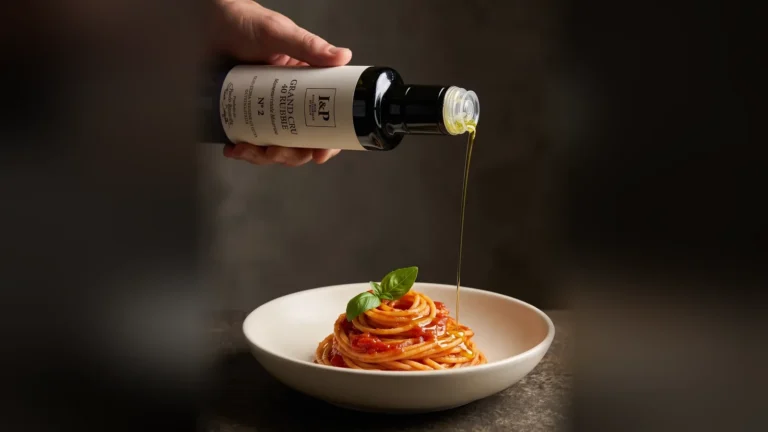
| Ideal Use | Raw (as a finishing oil) on dishes with character | To be used in cooking, daily use, or broad pairings. |
Why the Territory Changes Everything, Even with the Same Cultivar
There is a thought experiment that clarifies the concept of terroir in oil better than any theoretical explanation. Take the exact same cultivar, plant it in two olive groves just a few kilometers apart, with different sun exposures and different soil compositions. Harvest the olives on the very same day, process them in the same oil mill using the exact same technique. You will get two different oils.
Not different due to faults or process variations: different because the soil, the slope of the land, the exposure to the sun and wind leave a chemical signature in the fruit that cannot be erased. This is what is called terroir in viticulture, and it holds the exact same weight in quality olive growing.
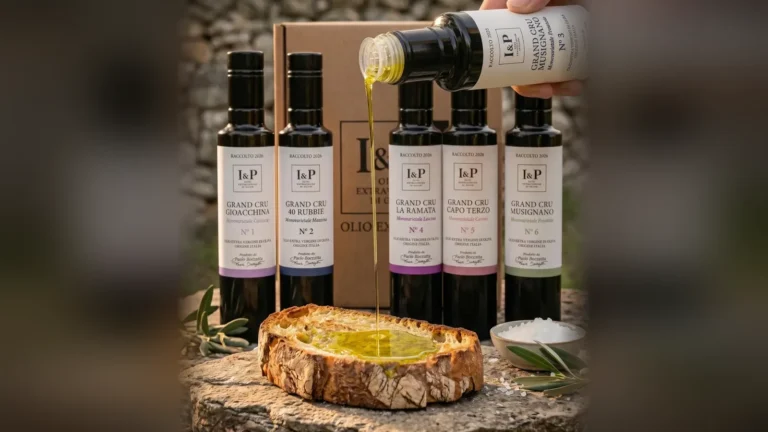
I&P demonstrates this concretely with its Grand Crus. Three Caninese monocultivars from three distinct olive groves in the same area yield oils with measurable analytical profiles that are sensorially distinct. The same base volcanic soil, the same cultivar, the same oil mill: yet Musignano, Capo Terzo, and Gioacchina have completely different characters. This difference isn't just romantic—it is documented in the laboratory.
I&P Monocultivars: Four Cultivars, One Territory
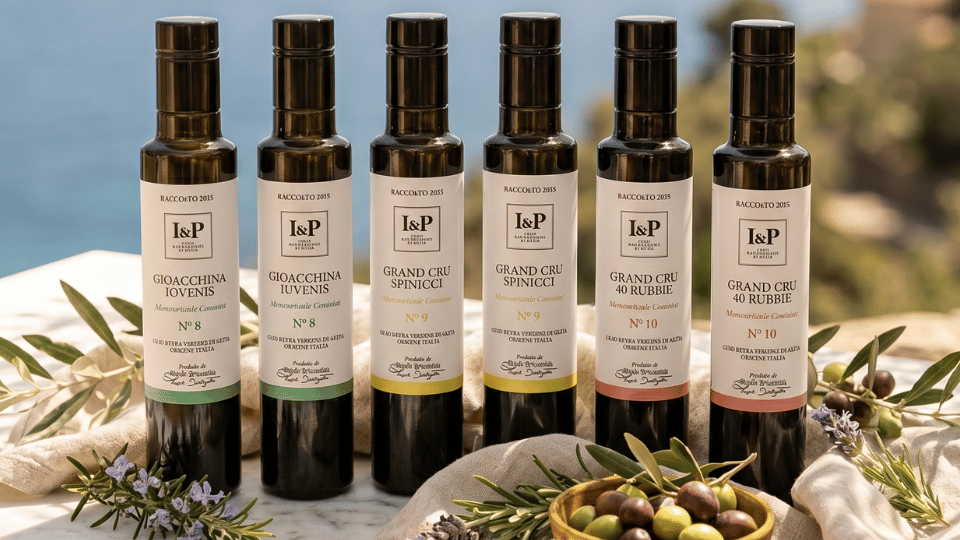
The I&P Grand Crus are all 100% monocultivars, produced from individually identified olive groves in the area of Canino, near Viterbo. Every label states the cultivar, the specific olive grove, the harvest date, and the certified analytical parameters. Not because it is mandatory: because it is the minimum form of respect toward the buyer.
Caninese cultivar
N°3 Grand Cru Musignano
Intense fruitiness, dominant artichoke, decisive bitterness, persistent pungency. Acidity 0.18%. The name recalls Lucien Bonaparte, Prince of Canino and Musignano, who inhabited these lands in the 19th century. 5 Gocce Bibenda 2026 Award.
Caninese cultivar
N°5 Grand Cru Capo Terzo
Medium-intense fruitiness, floral and wildflower notes that open up after the artichoke. Rounder compared to Musignano, with a pungency that emerges progressively. Early harvest in October.
Maurino cultivar
N°2 Grand Cru 40 Rubbie
Maurino here expresses a distinct personality from Caninese: green fruitiness with notes of unripe tomato, cut grass, and almond. Clean pungency, elegant bitterness. Grande Olio Slow Food 2026.
Caninese cultivar
N°1 Grand Cru Gioacchina
Another Caninese, different notes. In its pure form, it reveals an original profile: medium fruitiness with notes of aromatic herbs, and a smooth, persistent finish. Polyphenols: 399 mg/kg.
Four oils from the same geographical area, from the same oil mill, produced with the exact same philosophy. Four different personalities. This is what it means to work on monocultivars with rigor: not trying to always make "the best," but listening to what each cultivar has to say.
How to Recognize a Monocultivar on the Label
There is no legal requirement mandating the declaration of the cultivar on the label. A producer can sell a 100% Caninese oil without writing it anywhere. Because of this, the mere presence of the indication is a signal in itself: whoever includes it takes on a precise responsibility regarding the sensory profile of their oil.
When looking for a monocultivar, check for these elements:
- Cultivar nameon the front or back label (e.g., “100% Caninese”, “Monocultivar Frantoio”, “Pure Coratina”)
- Name of the olive grove or cru, if present: it indicates a further level of traceability
- Harvest date, not just the expiration date: a monocultivar expresses its absolute best within the first 12 months from harvest
- Declared acidity: below 0.3% indicates an oil processed with care; above 0.6% leaves a few open questions
- Origin of the olives: “bottled in Italy” is not enough, you need to know exactly where the olives come from
Why to choose a monocultivar
It is not a matter of gastronomic snobbery. It is a matter of awareness.
Choosing a monocultivar means knowing exactly what you are bringing to the table: which plant, which territory, which vintage. It means being able to compare, learn, and develop a personal preference that goes beyond "I like this" toward "I like this because it is an early-harvest Caninese, and I recognize it from that wild artichoke that I immediately perceive on the nose."
It also means making a more conscious choice from a nutritional standpoint: high-quality monocultivars, processed from olives harvested at the optimal time, have polyphenol concentrations that industrial blends rarely reach.
And it means supporting an olive biodiversity that risks shrinking: of the 500 cataloged Italian cultivars, many are grown in minimal quantities, by just a few families, in specific territories. Buying them is the most direct way to ensure they continue to exist.
100% single-cultivar from Etruscan Tuscia
Four cultivars, four personalities, one territory. Each I&P Grand Cru displays the cultivar, olive grove, harvest date, and certified analytical parameters on the label. No blending, no compromise: only what the plant and the soil of Canino decided to be that year.