Three Major Misconceptions About Extra Virgin Olive Oil
Extra virgin olive oil is one of the most defining elements of Italian cuisine. Perhaps no other ingredient represents our country as much as olive oil. It is present in home kitchens, restaurants, trattorias, cooking schools, and major gastronomic laboratories.
Everyone, from the grandmother preparing Sunday lunch to the Michelin-starred chef, is convinced they know it very well. Yet, this very apparent familiarity hides a paradox: extra virgin olive oil is probably one of the most misunderstood ingredients in our culinary tradition.
Over the last twenty years, the average quality of the best EVO oils has grown tremendously. Extraordinary oils have appeared on the market, incredibly rich in aromas and beneficial substances, with polyphenol contents that often exceed 400 mg per kilogram of oil. It is precisely these great oils that I would like to talk about. Not the defective, oxidized, or mediocre oils, but those high-quality extra virgin olive oils that represent one of the greatest Italian agri-food excellences.
There are at least three major misconceptions surrounding these oils that should be overcome. These are not simple technical details, but cultural errors that profoundly influence the way we cook.
First misconception: judging an oil solely on its own
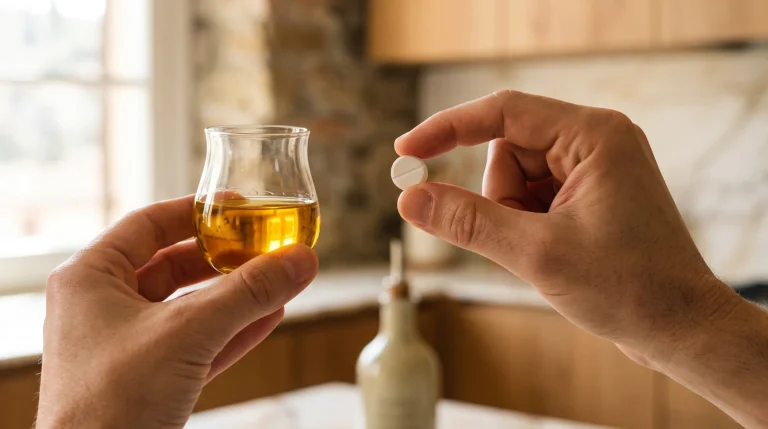
The first misconception is probably the most common. We are used to thinking that a great oil can only be judged by tasting it on its own. You pour it into a small glass, smell it, look for aromas of artichoke, cut grass, green tomato, almond, or aromatic herbs, evaluate its bitterness and pungency, and finally give a judgment. Of course, this phase is important. It is essential for recognizing quality and identifying any defects.
But there is a fundamental problem: oil is not meant to be consumed on its own. Oil is a gastronomic tool. This statement might sound provocative, but it is the central point of the matter. An oil is not an end, but a means. It is not a tasting beverage, but rather an ingredient destined to transform food. Consequently, the fundamental question should not be: "Do I like this oil?", but "What does this oil do to the food?".
These are two completely different questions.
Among great oils, there is not necessarily an absolute best. There is the best one to achieve a specific effect. It can even happen that an oil which seems unbalanced when tasted on its own, being very bitter or very pungent, turns out to be extraordinary in a specific gastronomic application.
The mistake lies in automatically transferring the judgment made on its own to the final dish. In reality, when oil interacts with food, everything changes. Aromas, intensity, balance, and persistence are profoundly altered. By coming into contact with proteins, fibers, starches, and water, the oil builds a brand-new sensory experience. For this reason, we should start considering it not as a simple condiment, but as a true, structural ingredient in culinary design.
Second misconception: a light oil for light foods and a strong oil for strong foods
The second mistake stems from a simplification that we have all heard repeated countless times.
Fish equals delicate evoo.
Meat equals intense oil.
It is a rule that seems logical on the surface, but is profoundly wrong. In fact, the final effect of an oil depends on many variables that are often ignored. The first is the quantity. Adding a teaspoon of oil does not yield the same result as pouring three tablespoons. The second variable is the contact time. An oil allowed to interact for just a few seconds behaves differently than an oil that accompanies a food for several minutes.
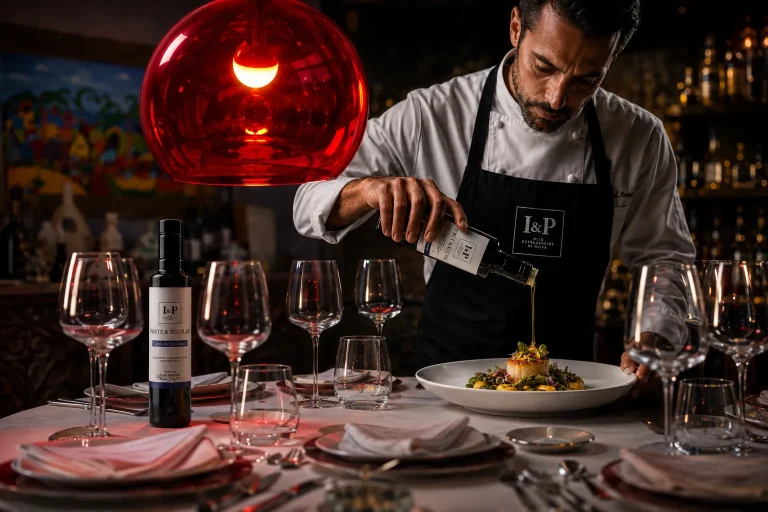
The third variable is temperature. A hot food substantially alters the aromatic and taste perception of the oil. In other words, there is no absolute pairing between an oil and a food. Instead, there is an effect that a specific oil produces on a specific food under certain conditions of use. A very complex oil, rich in aromas and personality, when used in small quantities, can magnificently enhance a very delicate fish.
Similarly, a smoother oil, if used in high quantities, can become dominant over seemingly robust preparations. The pairing paradigm must therefore be completely rethought.
We should stop asking ourselves which oil is suitable for a specific dish and start wondering what result we want to achieve. Do we want to enhance sweetness? Do we want to introduce a herbaceous note? Are we looking for more freshness? Do we want to extend the aromatic persistence?
Furthermore, after deciding on the effect you want to achieve, you must always experiment. Precisely because the oil interacts with the food, it is always necessary to verify that the desired effect, based on the tasting on its own, actually takes place. In this way, oil becomes a creative language, rather than just a commercial product category.
Third misconception: great oils are only for finishing
The final major misconception concerns the way it is used. Many believe that a great oil, especially if expensive, should be used exclusively raw, like a sort of final jewel to be added in just a few drops onto the dish.
Of course, finishing is important and can deliver extraordinary results. But limiting oneself to this means utilizing only a small fraction of a great extra virgin's potential.
Great extra virgin olive oils are important during cooking as well. Their high polyphenol content, aromatic richness, and structure make them extremely compelling ingredients for many culinary techniques. The prejudice that using a high-quality extra virgin oil for cooking is a waste still persists.
In reality, the opposite is often true. Many high-quality oils maintain remarkable stability at high temperatures and manage to transfer characteristics to the food that other fats simply do not possess. The case of frying is emblematic. When you have an extra virgin oil rich in polyphenols, with values exceeding 400 mg per kilogram, you have an oil that is particularly resistant to oxidation. If the frying is performed correctly—meaning at a controlled temperature and with an abundant amount of oil—the results can be excellent. Of course, this is not about turning every fry into an exercise in gastronomic luxury. It is about understanding that a great extra virgin oil is not an object to be contemplated, but an extraordinary culinary tool.
A new culture of olive oil
Perhaps the time has come to make a small cultural shift. For many years, we have learned to classify extra virgin olive oils. We have divided them into light, intense, fruity, delicate, and elegant.
All of this is useful, but it is no longer enough. We need to take a step further. We must learn to reason about the effects of the oil and not just its characteristics. After all, no great chef chooses an ingredient because it is beautiful in itself. They choose it because they know what it will produce on the plate.
Extra virgin olive oil deserves the exact same approach. Perhaps the very definition of a condiment is no longer sufficient. Extra virgin olive oil is a transformative ingredient. It is a tool that alters food, shapes its aromatic profile, shifts its perceptual structure, and amplifies its complexity.
More than learning how to taste it, we must learn how to use it.
And this is precisely where the future of Italian olive oil culture is at stake: moving from the celebration of the oil to its full gastronomic understanding. Because a great oil is not the one that excites the most in the glass. It is the one that manages to improve the food the most and, consequently, bring the greatest pleasure to the diner.
An article by our Founder Paolo Borzatta, also published on centrotavola.eu