Olive oil is the undisputed king of the Mediterranean diet, a silent companion that we take for granted on our tables but which hides a world of culture, technique, and health. We often buy a bottle at the supermarket attracted by an eye-catching label, but do we really know what we are bringing into our kitchen? Not all oils are created equal. To find our way and make conscious choices for our well-being, we must start from the basics: understanding when an olive oil can claim the title of "Extra Virgin" and why science considers it a true elixir of long life.
What is Extra Virgin Olive Oil (EVO) really?
From a botanical point of view, olive oil is an edible oil extracted from the fruits of the olive tree (Olea europaea). Its main characteristic, which makes it unique compared to other fats, is its high content of monounsaturated fats—the "good" fats that protect our body. However, the true magic of extra virgin olive oil lies in its production method: the "virgin" and "extra virgin" types are obtained exclusively through the mechanical pressing of olives. This means that the oil is, to all intents and purposes, a fresh fruit juice, without any addition of chemical solvents or industrial refining processes.
Quality criteria: the 0.8% rule
To protect consumers and guarantee quality, European regulations (EEC Regulation No. 2568/91 and subsequent updates) have set very strict standards. In order to be marketed under the designation "Extra Virgin Olive Oil," an oil must comply with two fundamental parameters:
Mechanical extraction: It must be obtained strictly by cold mechanical methods only, without chemical solvents.
Acidity: The acidity of an extra virgin olive oil must never exceed 0.8%. It has nothing to do with the "tingle" or "sting" in the throat (which is actually a quality!), but is rather the concentration of free fatty acids. The lower it is, the healthier the olives were and the more they were harvested at the right stage of ripeness.
Much more than a condiment: a natural “Nutraceutical”
From a nutritional point of view, 100 grams of olive oil provide about 900 calories in the form of lipids. But we shouldn't be frightened by the calorie count: high-quality EVO oil, the result of a careful artisanal production process, is not just a simple fatty condiment. It is a functional food, or rather, a "nutraceutical" ("alicamento"): a blend of food and medicine. In fact, EVO oil is a precious source of active molecules that keep their beneficial effects on our body's various organs completely intact:
- Vitamin E (tocopherol) and Vitamin A: Powerful natural antioxidants.
- Iron: An essential mineral for the body.
- Polyphenols (such as hydroxytyrosol and oleuropeina): Molecules with exceptionally high antioxidant activity, capable of countering the oxidative stress caused by free radicals, the main culprit behind cellular aging and numerous diseases.
Thanks to this extraordinary mix of elements, artisanal EVO oil acts as a natural anti-inflammatory, helps control cardiovascular risk by positively influencing blood lipid levels, and fights arteriosclerosis. Consuming high-quality oil every day is the first and most pleasant step of prevention we can take at the table.
Article written in collaboration with Dr. Angela Zoccali, Medical Nutritionist. Instagram: @nutrizionepreventiva
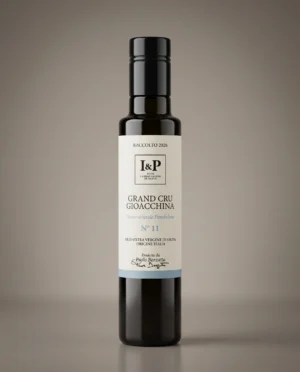
Image; @il_sommOlier
Our evoos with high level of polyphenols
-
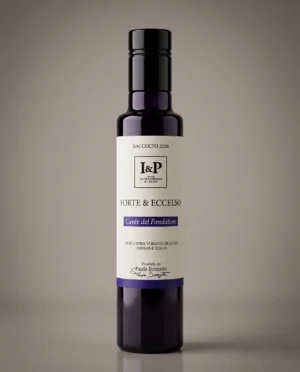
Forte & Eccelso – Founder's Cuvèe
Price range: €24,00 through €34,00Select options This product has multiple variants. The options may be chosen on the product page -
-